
1. Set context
Office, runway, travel, or cosplay—context steers outfit generator coherence.
Generate AI fashion outfits from text. Any style, occasion, or aesthetic.
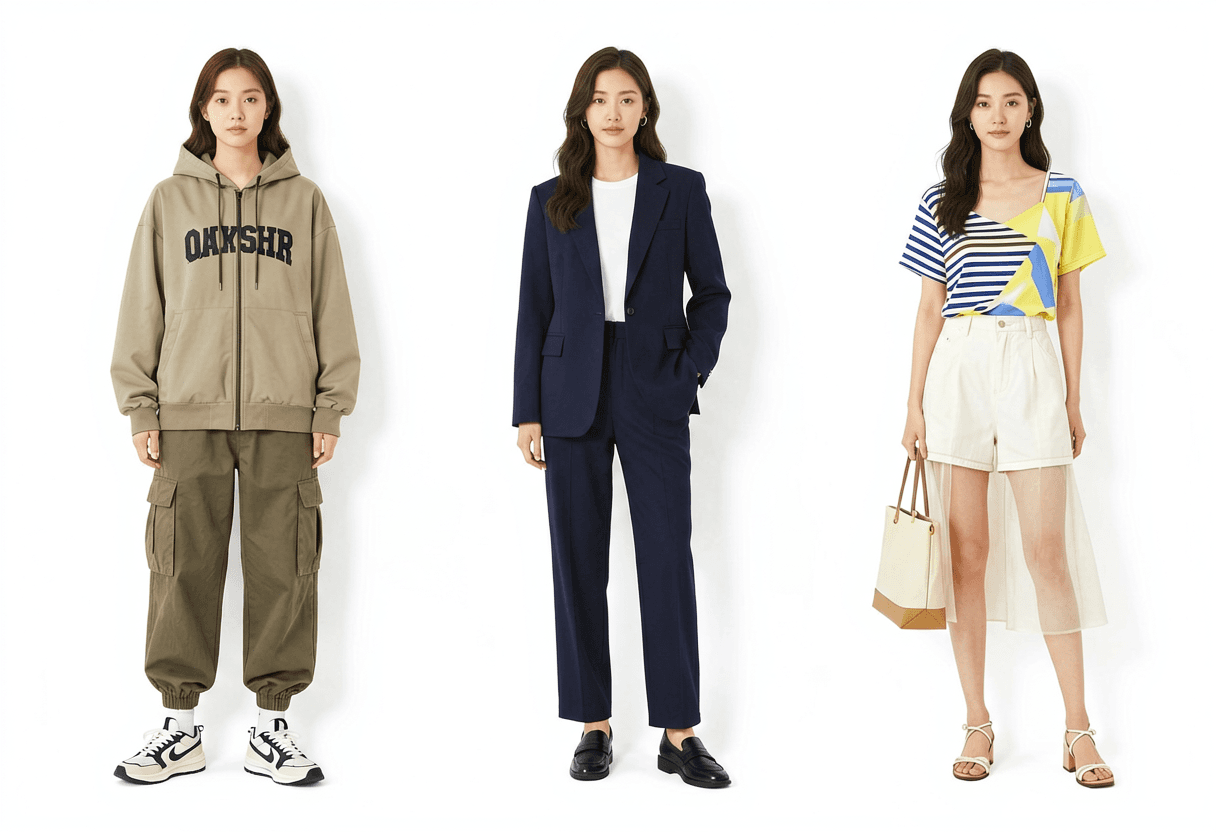
An outfit generator helps stylists, illustrators, and marketers visualize clothing combinations before photoshoots or pattern work. With an outfit generator workflow, you describe silhouette, fabrics, palette, and occasion—then iterate outfits the way you would sketch. The outfit generator approach accelerates moodboards: streetwear, formal, vintage, or fantasy armor can all start from the same outfit generator session with different adjectives. Retail teams use an outfit generator to explore inclusive sizing visuals; creators use an outfit generator to design character costumes. Remember an outfit generator does not replace tailoring—it inspires direction so your outfit generator picks narrow before production.
An outfit generator is a text-to-image workflow focused on clothing and styling. The term outfit generator is used by fashion students, game artists, and social teams who need quick visual drafts.
Outfit generator output may need human editing for fit accuracy—treat outfit generator renders as concepts.
Ethically, outfit generator users should avoid generating exploitative imagery and should respect model likeness rights.
Outfit generator searches blend fashion vocabulary with illustration. These feature notes map to real outfit generator needs.
A good outfit generator prompt names season, materials, and color story. Without them, outfit generator outputs feel generic.
Oversized, tailored, A-line—silhouette words steer an outfit generator toward recognizable shapes.
Bags, jewelry, and hats differentiate outfit generator variants for the same base look.
Use original descriptions in your outfit generator prompts rather than copying trademarked logos.
Use Text to Image above with these outfit generator habits.
Office, runway, travel, or cosplay—context steers outfit generator coherence.
Denim, silk, wool—material words improve outfit generator realism.
Change one variable per outfit generator run to learn what moves the look.
Speed to visual alignment beats slow sketch cycles when stakeholders need agreement fast—outfit generator sessions create shared references.
It can be stylized or realistic depending on prompt; outfit generator users should match style words to brand guides.
Yes—describe coverage and layering explicitly in outfit generator prompts.
Prompt diverse body descriptors; outfit generator models vary—review respectfully.
Use exports as inspiration; textile repeat requires separate pattern work beyond outfit generator stills.
Try Image to Image AI to iterate a chosen outfit generator frame.
Optional cookies help us understand usage and measure ads. Essential cookies stay on so Voor works.